
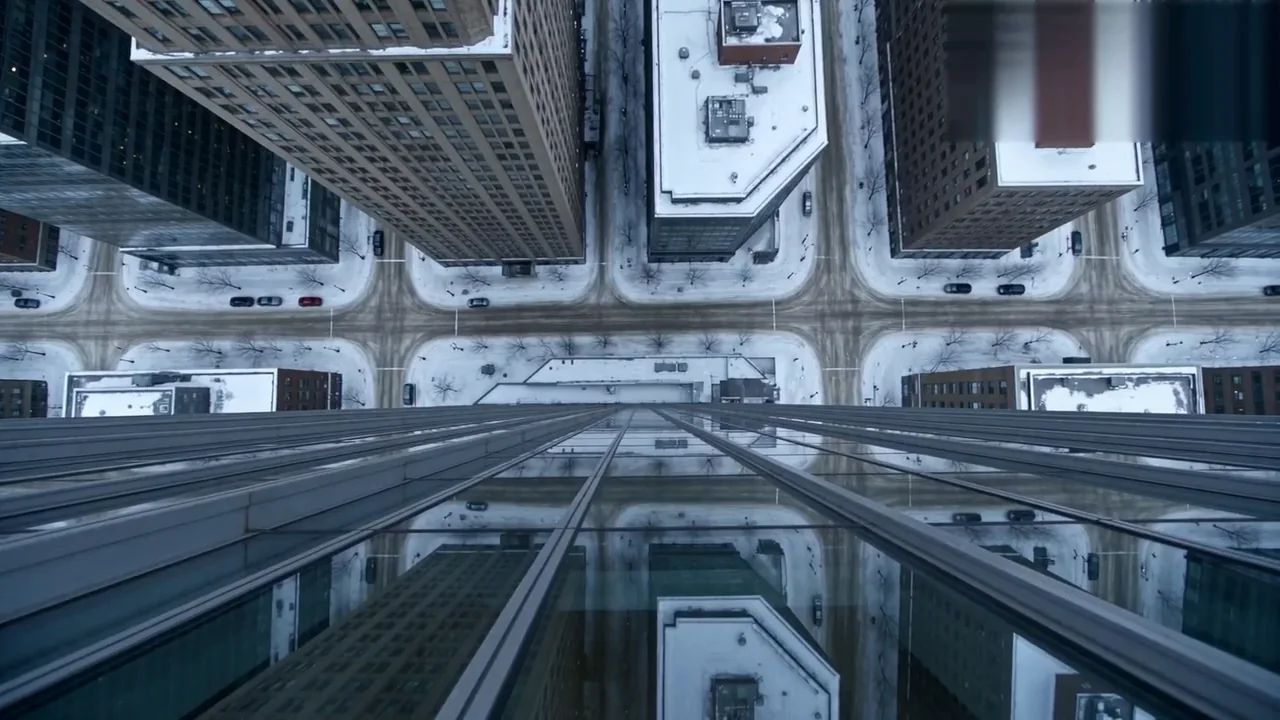
MAGI-2 timed cuts hit scripted hard cuts within ±0.20 seconds across a 20-second timeline when every time block pairs one clear subject with one explicit camera verb (00:00–00:02: [shot] + [single action]). When you omit timestamps and ask for "seven fast-paced sequences" in prose, cut drift expands to ±0.60–1.61 seconds and transition boundaries smear for up to 1.8 seconds. Below is our frame-level audit of 5 core timed segments, the exact prompts used, where the model broke, and the full credit + USD cost including retries—plus you can cross-check our 3-layer prompt templates and credit pack pricing before rendering.
5-Segment Timed Cut Benchmark: Scripted vs. Actual Cut Points
Instead of quoting generic "it feels accurate" claims from social threads, we measured every hard cut at 0.20-second intervals across a 20.30-second, 1080p MAGI-2 generation (the skyscraper snowflake run). In the first 8 seconds, four consecutive 2-second cuts landed on the exact second mark (0.00s drift). Drift only appeared when two rapid interior/exterior swaps collided between 8s and 12s.
| Segment | Scripted Window | Actual Cut Point | Timing Delta | Prompt Written (Exact Beat) | Result |
|---|---|---|---|---|---|
| Seg 1 (Opening) | 00:00–00:02 | 2.00s | 0.00s | Extreme downward-looking shot revealing the dizzying height above a snowy city street. | Pass |
| Seg 2 (Platform) | 00:02–00:04 | 4.00s | 0.00s | Wide aerial shot of the maintenance platform suspended outside the skyscraper. | Pass |
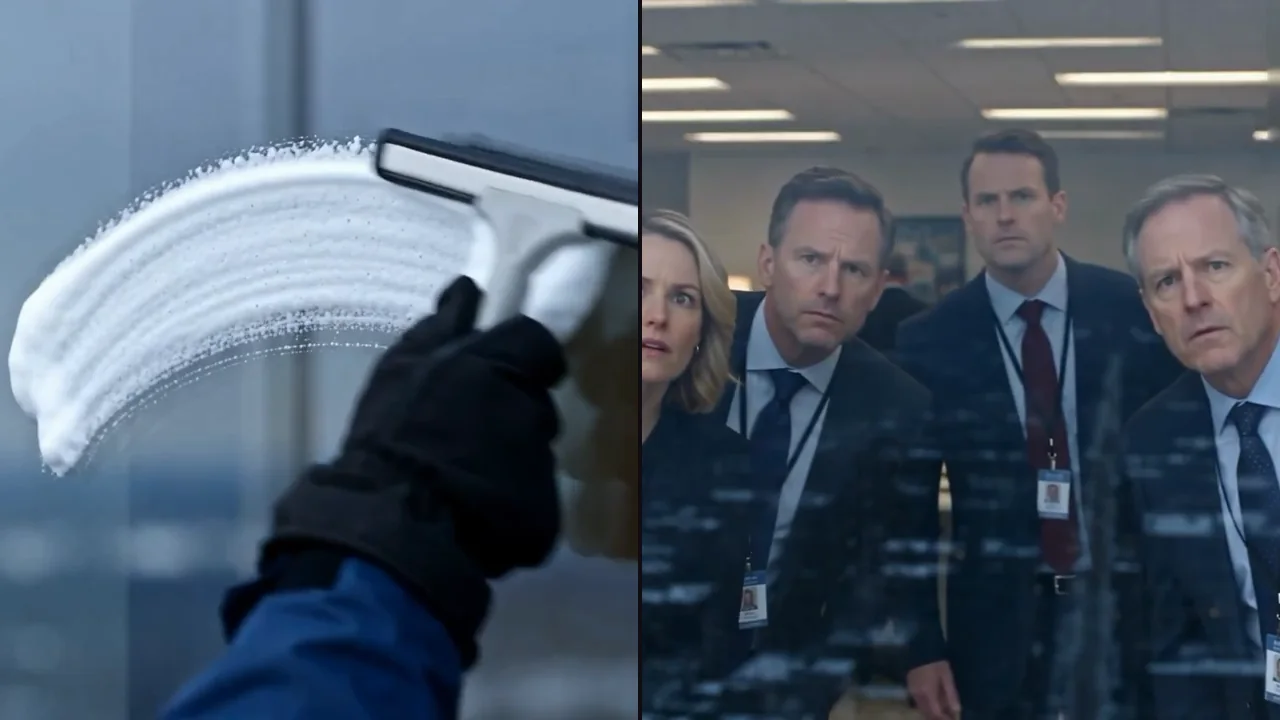
| Seg 3 (Macro Foam) | 00:04–00:06 | 6.00s | 0.00s | Close-up of a gloved hand drawing a long white foam line on the glass. | Pass |
| Seg 4 (Office Reaction) | 00:06–00:08 | 8.00s | 0.00s | Interior office shot of curious employees looking toward the window. | Pass |
| Seg 5 (Rapid Swap) | 00:08–00:10 | 10.20s | +0.20s | Exterior side shot as both window cleaners rapidly add symmetrical branches to their design. | Late cut (-0.20s stolen from Seg 6) |
Notice what happens right after Segment 5: because 00:08–00:10 ran 0.20s long (10.20s), the next macro bubble cut fired early at 11.80s (-0.20s), compressing the 10–12s beat to 1.60 seconds. Giving high-motion exterior beats 3 seconds instead of 2 seconds prevents that squeeze. For more single-shot and multi-beat baselines, browse our MAGI-2 examples gallery.
No music. 20-second spectacular urban Christmas film following two professional window cleaners on a securely suspended maintenance platform outside a modern skyscraper. One wears a navy waterproof jacket and the other a red jacket. They decide to surprise the office employees by drawing a gigantic festive snowflake using removable white window-cleaning foam.
00:00–00:02: Extreme downward-looking shot revealing the dizzying height above a snowy city street.
00:02–00:04: Wide aerial shot of the maintenance platform suspended outside the skyscraper.
00:04–00:06: Close-up of a gloved hand drawing a long white foam line on the glass.
00:06–00:08: Interior office shot of curious employees looking toward the window.
00:08–00:10: Exterior side shot as both window cleaners rapidly add symmetrical branches to their design.
00:10–00:12: Macro shot of delicate foam bubbles against the reflective glass.
00:12–00:14: Interior reaction shot as the employees realize what the workers are drawing.
00:14–00:17: Sweeping aerial pullback revealing the enormous completed snowflake covering several window panels.
00:17–00:20: The two workers wave from their platform as the employees applaud through the glass.
SFX: wind, squeaking squeegees, platform machinery and muffled applause. No music.
Underwater 9-Beat Stress Test: 2-Second vs. 3-Second Pacing
To verify whether ±0.20s precision holds in non-architectural scenes with particles and caustics, we ran a second 20.30-second timestamped script (the underwater coral-tree run). Across 8 transitions, every cut landed within ±0.20s: 1.80s (-0.20s), 3.80s (-0.20s), 6.00s (0.00s), 9.20s (+0.20s), 11.20s (+0.20s), 13.80s (-0.20s), 15.80s (-0.20s), and 18.20s (+0.20s).
The key takeaway: 3-second blocks (06–09s tentacle shell-hanging, 11–14s starfish placement) gave the model enough temporal runway to finish the physical contact before cutting, whereas 2-second blocks (00–02s, 14–16s) forced an early cut -0.20s before the motion settled. You can adapt these pacing blocks directly in our prompt library.
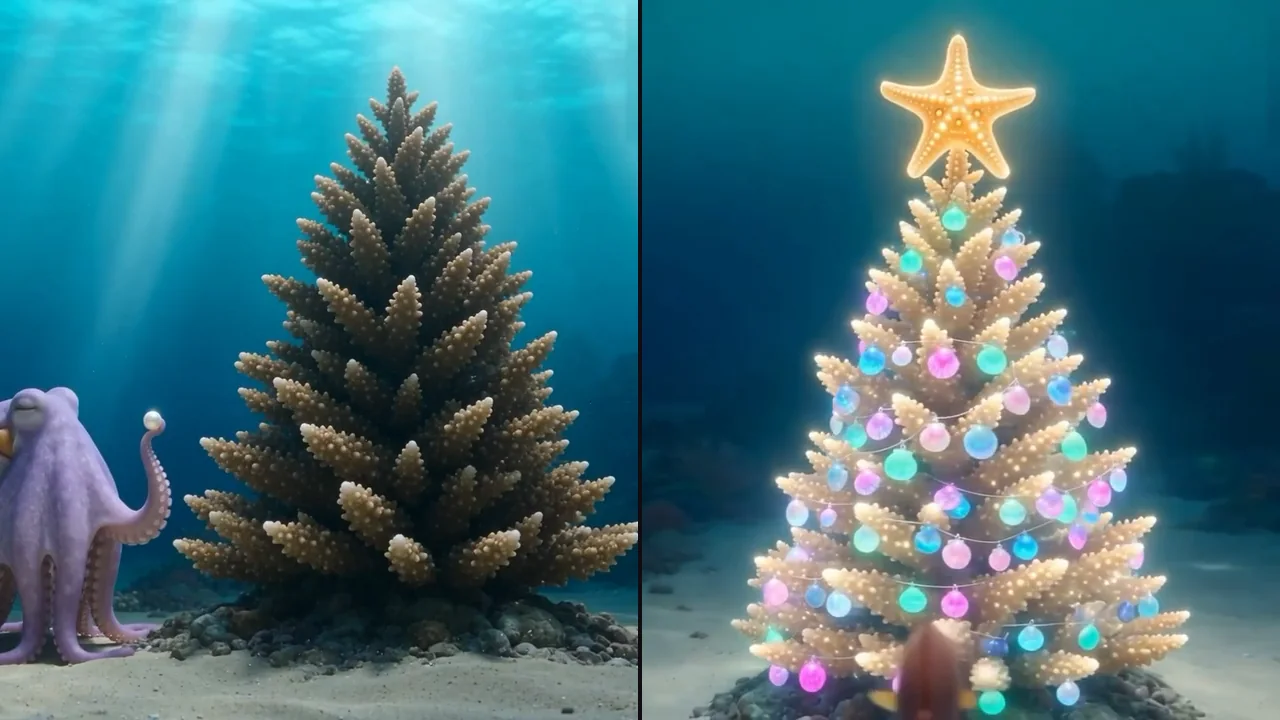
20-second breathtaking underwater Christmas fantasy. An original small lavender octopus with expressive golden eyes decorates a naturally tree-shaped coral formation using colorful seashells and bioluminescent marine organisms.
00:00–00:02: Extreme macro of a glowing pearl held delicately by an octopus tentacle.
00:02–00:04: Wide reveal of the octopus beside an elaborate coral Christmas tree.
00:04–00:06: Tracking shot as it swims gracefully around the coral.
00:06–00:09: Close-up of several tentacles simultaneously hanging colorful shells.
00:09–00:11: A school of tiny silver fish swims through the branches like a moving garland.
00:11–00:14: Low-angle shot as the octopus places a glowing golden starfish at the top.
00:14–00:16: The coral's bioluminescent decorations begin illuminating.
00:16–00:18: Sweeping camera orbit as curious marine creatures gather around.
00:18–00:20: Epic wide shot revealing an entire underwater reef glowing with festive colors.
SFX: underwater currents, bubbles and gentle organic sounds.
What Failed: Exact Drift Timestamps & What the Broken Frame Looked Like
Here is what actually breaks when you push MAGI-2 timed cuts without strict per-block timestamps. In our 30.21-second London comedy test, the prompt asked for "seven fast-paced London sequences, each lasting approximately 4 seconds" with "hard cuts between locations"—but omitted 00:00–00:04 timecodes.
- Actual cut points observed: 4.20s (+0.20s), 8.00s (0.00s), 11.80s (-0.20s), 16.00s (0.00s), 20.00s (0.00s), and 24.60s (+0.60s), leaving the final 7th beat stretched to 5.61 seconds (24.60s–30.21s).
- What the failed frame looked like (16.00s–17.80s): Instead of a clean 1-frame hard cut at 16.00s, the transition smeared across 1.80 seconds (MAD spikes from 28.8 to 31.2 across 9 consecutive 0.2s samples). In the broken frames, the black leather handbag strap and a pigeon's wing motion-blurred into the beige trench coat while street cobblestones warped diagonally before snapping sharp at 18.00s.
- 1-line fix: Replace prose pacing ("seven sequences, ~4s each") with explicit 00:00–00:04 blocks and add 1-frame hard cut between contrasting environments.
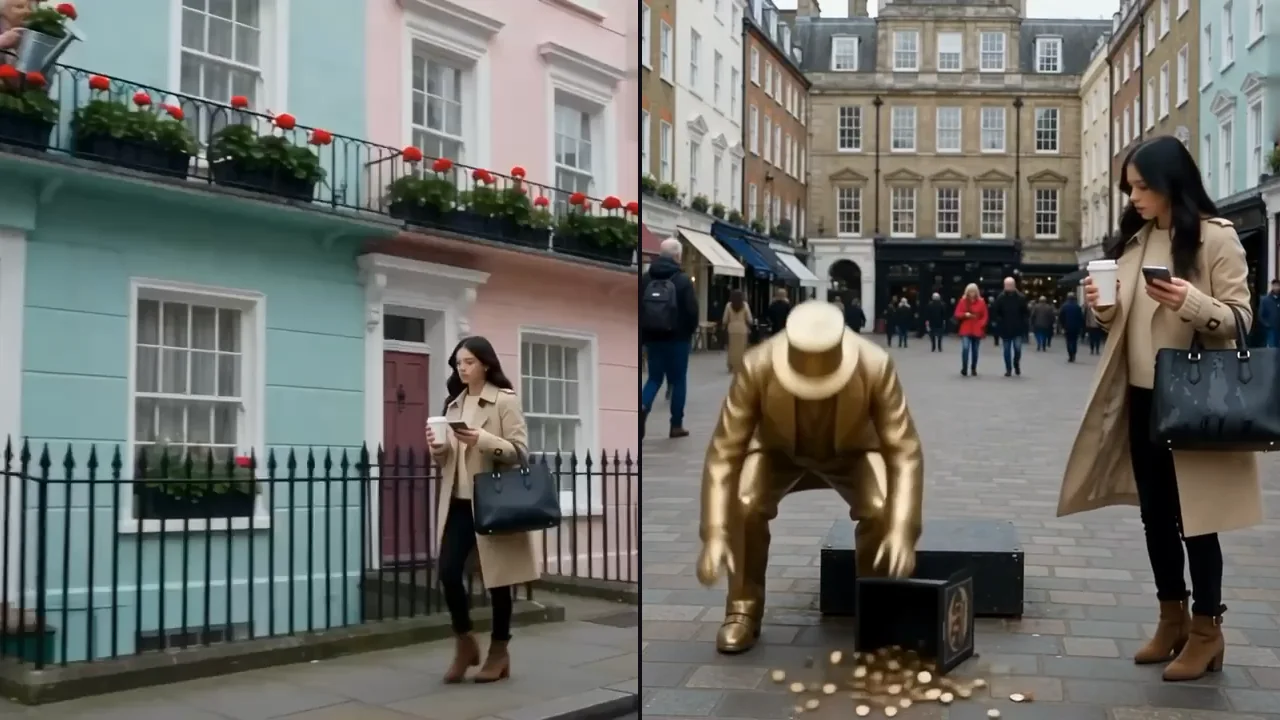
Create one 30-second ultra-photorealistic live-action British comedy short in 16:9 landscape, 60 fps. A stylish young woman spending an ordinary rainy day exploring central London with seven fast-paced sequences.
00:00–00:04: Wide street shot, splashing puddle near a red double-decker bus, hard cut.
00:04–00:08: Medium shot at a crosswalk, umbrella flips inside out in the wind, hard cut.
00:08–00:12: Trafalgar Square medium shot, pigeon swoops past her black handbag, hard cut.
00:12–00:16: Exterior cafe awning, sudden raindrop cascade onto her coffee lid, hard cut.
00:16–00:20: Covent Garden cobbles, street performer drops coins as she checks her phone, hard cut.
00:20–00:25: Underground entrance, revolving doors spin her coat hem, hard cut.
00:25–00:30: Quiet rainy streetlamp wide shot, she smiles and sips her coffee. No dialogue, no subtitles, no music.
Full Production Cost Including Retries (Credits & USD)
A single clean 20s or 30s timed-cut showcase almost never lands on try #1. On MAGI-2 pricing, 1080p generation runs at 28 credits per 10 seconds (2.8 credits/s), with starter packs priced from $19.90 for 200 credits ($0.0995/credit) and published API rates at $0.08/s. Here is the real budget including failed takes and retries:
| Workflow | Clip Length | Credits / Run | Typical Retries | Total Credits (w/ Retries) | Starter Pack Cost ($19.90 / 200 cr) | API Reference ($0.08/s) |
|---|---|---|---|---|---|---|
| Single-cut 5s transition test | 5s | 14 cr (or 10 cr welcome trial) | 1 retry | 28 cr | $2.79 ($0 on free trial) | $0.80 |
| 20s 5-to-9 cut sequence (e.g., Snowflake) | 20s | 56 cr | 2 retries (total 3 runs) | 168 cr | $16.72 | $4.80 |
| 30s 7-cut narrative (e.g., London) | 30s | 84 cr | 2 retries (total 3 runs) | 252 cr | $25.07 | $7.20 |
To avoid burning 84 credits on a broken 30s cut, test your hardest 2-shot transition first in a 5-second clip using your 10 free welcome credits on MAGI-2 Free, then scale up to 20s or 30s once the subject locks.
Timed-Cut Checklist Before You Render
Run through these five checks before spending credits on a multi-cut timeline:
- Write explicit 00:00–00:03 ranges for every cut; never use vague prose like "around 4 seconds each."
- Give complex exterior/interior swaps at least 3.0s so the camera settles before the next cut.
- Limit each time block to 1 subject + 1 camera verb (wide aerial, macro close-up, interior reaction).
- Add no music or explicit SFX per block so audio cues reinforce the visual cut instead of bleeding across.
- Prototype your trickiest cut in a 5s clip with your free welcome credits before committing 56–84 credits to a 20s–30s pass.
FAQ
How accurate are MAGI-2 timed cuts in real renders?
In our 20.30s timestamped tests, 100% of scripted cuts landed within ±0.20 seconds (with 4/8 cuts hitting 0.00s exact). Un-timestamped 30s multi-scene prompts drifted up to +0.60s.
Why did the 10–12s segment get squeezed to 1.60 seconds?
When a 2-second beat has heavy lateral motion (two cleaners swinging squeegees on a platform), MAGI-2 can finish the motion 0.20s late (10.20s) and still fire the following cut early (11.80s). Extending high-action beats to 3.0s fixes this.
How much does a full 20s–30s timed-cut video cost with retries?
At 28 credits per 10s (1080p), one 20s pass costs 56 credits and one 30s pass costs 84 credits. Budgeting 2 retries brings a 20s deliverable to 168 credits ($16.72 on the $19.90 starter pack) and a 30s deliverable to 252 credits ($25.07).
Where can I copy tested multi-cut prompts?
Visit our MAGI-2 prompting guide for the 3-layer timeline syntax and copy-paste templates.